Keraflex Procedure
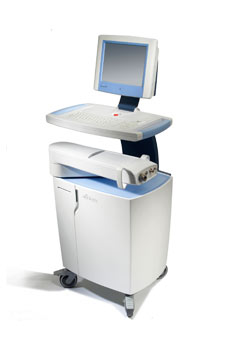
The Keraflex procedure, performed with the Vedera KXS, is used for the
correction of myopia and other refractive disorders, and for the treatment of
keratoconus.
This non-incisional procedure expands the eligibility criteria for people
seeking refractive correction and overcomes the current barriers to broader
adoption of laser vision correction, especially among people with low and
moderate myopia.
For more information, please click here
Conductive Keratoplasty
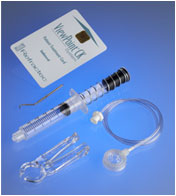
A unique procedure developed specifically for the improvement of near vision in presbyopic patients. NearVision CK (Conductive Keratoplasty) represents a safe, effective, non-laser alternative for patients over 40 who are ready for your help in eliminating their reading glasses.
In recent years, CK system has also been used to correct residual hyperopia after cataract surgery, to improve near vision after
LASIK, astigmatism, ....etc.
The OptiPoint Corneal Template is designed to make it easier for surgeons to
perform NearVision CK and achieve more consistent and accurate:
- Centration of treatment
- Spot placement
- Surgical technique
For more information, please click here
Macular Degeneration (AMD)
- The
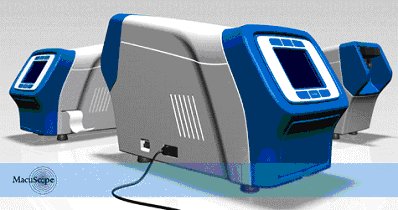
first commercially available instrument that accurately measures Macular
Protective Pigment Density (MPPD)
- The
proven standard methodology for measuring MPPD
- Validated
by researchers worldwide
- For
use by all primary eye care professionals
- Non-invasive,
Painless, Safe and Effective
- Takes
approximately 2-3 minutes per patient
- Cost-effective
- Practice-building,
referral generating
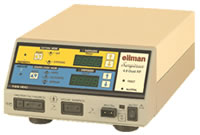
Radiosurgery device
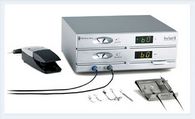
Using this High Frequency-Low Temperature 4.0MHz Radiofrequency device,
ophthalmic/oculoplastic procedures can be performed with less collateral tissue
damage, quicker healing with enhanced post operative results compared to laser,
electrosurgery or scalpel.
Advantages:
* accelerated healing as compared to standard cautery device or
incisional
laser
* high frequency / low temperature technology creates a post
operative
wound with increased tensile strength
* minimal collateral tissue damage enabling accurate interpretation
of
intraoperative frozen sections
* pure cut, cut/coagulation, coagulation, bipolar available
simultaneously
* availability of "clear field technique" hemostasis during
deep tissue
dissection, resulting in greater tissue viability than
with incisional CO2
laser
* reduced cost per procedure
* virtually maintenance free
* worldwide CE approval
Procedures:
include intraoperative frozen sections, biopsies, bipolar coagulation, upper
lid blepharoplasty, endoscopic brow / forehead lift, epilation for trichiasis /
distachiasis, punctal occlusion, endonasal DCRs, harvesting of palatal / buccal
grafts, harvesting of salivary tissue for transplantation, entropion / ectropion,
telanglectasias / spider veins, "shaving" of benign facial lesions /
blemishes without scarring, pterygium with harvesting of autograft, ptosis
repair, lid lesion resection without notching, canthoplasty, chalazion,
gunderson flap, lacrimal reconstruction, percutaneous creation of upper lid
crease, fat shrinkage, fat transection without clamping, hughes procedures with
creation of tarsoconjunctival flap, lower lid transconjunctival blepharoplasty,
drainage of subretinal fluid, dissection and exposure for gold / platinium
weight implantation, coagulation of choroidal tissue without scleral affect,
eyelid reconstruction secondary to trauma, enucleation, etc.
Titan surgical instruments